Why Delta-8 Feels Milder Than Delta-9: The Science Behind
Delta-8 THC has carved out a distinct space in the hemp world, offering a smoother, more manageable high compared to its more intense cousin, Delta-9 THC. One of the most frequent questions people have is: Why does Delta-8 feel milder than Delta-9? This blog will help you explore the science behind the difference, breaking down how these two cannabinoids interact with your body in unique ways.
Whether you’re new to hemp or a pro exploring alternative cannabinoids, this guide will help you understand why Delta-8 delivers a balanced, clear-headed experience.
Chemical Structure Differences
Delta-8 THC & Delta-9 THC are isomers, meaning they share the same chemical formula. However, they differ slightly in molecular structure. The difference lies in the site of a double bond:
- Delta-9 THC has a double bond on the ninth carbon chain.
- Delta-8 THC has the bond on the eighth carbon chain.
Though it might sound like a small variation, this shift significantly affects how each compound binds to cannabinoid receptors in the human body. That slight difference contributes to why users often report that Delta-8 THC effects are less overwhelming than Delta-9. This structural nuance plays a major role in shaping the psychoactive profile of each compound.
Interaction with the Endocannabinoid System (ECS)
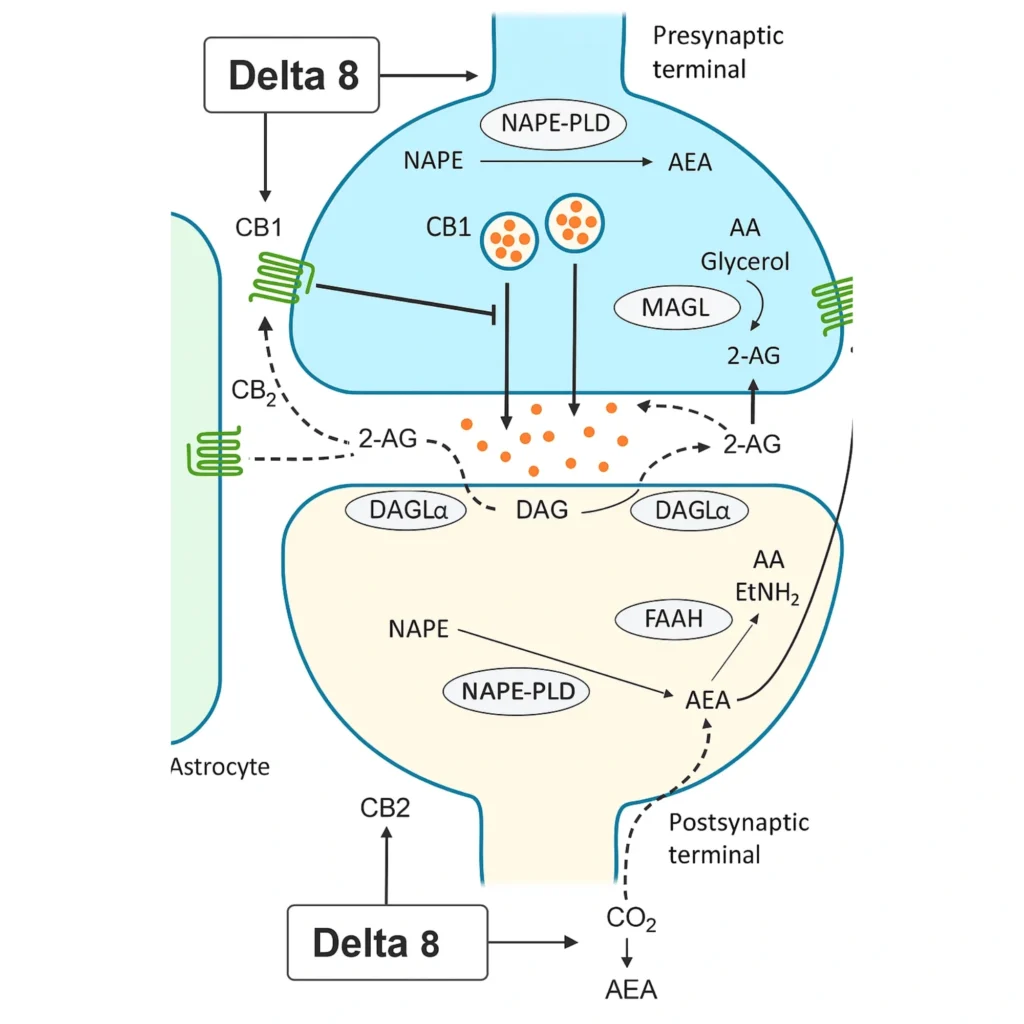
The Endocannabinoid System (ECS) regulates functions like mood, sleep, appetite, and pain. It’s made up of two primary receptor types: CB1 (primarily in the brain) & CB2 (mostly in the immune system).
- Delta-9 THC binds strongly to CB1 receptors, producing intense psychoactive effects.
- Delta-8 THC binds more moderately to CB1 receptors, leading to a gentler effect.
According to a study published in the journal Cannabis and Cannabinoid Research, Delta-8 THC demonstrates about half the binding affinity to CB1 receptors compared to Delta-9 THC.
This reduced binding strength results in diminished psychoactivity, allowing for more functional or relaxed usage without the sharp peaks or mental intensity often associated with Delta-9.
In practical terms, this means users are more likely to experience relaxation and euphoria with Delta-8 THC effects but without the anxiety or mental fog that can accompany high doses of Delta-9.
Reported Effects from Users
The way Delta-8 and Delta-9 make people feel has been well documented by user reports, anecdotal data, and consumer feedback. Many consumers describe Delta-8 as delivering a lighter, clearer experience.
Common Descriptions of Delta-8 Effects
- Mild euphoria
- Enhanced focus and clarity
- Reduced anxiety
- Light body relaxation
In contrast, Delta-9 THC effects are often more intense:
- Strong euphoria
- Altered perception of time and space
- Increased risk of anxiety or paranoia
- Sedation at higher doses
This is where the Delta-8 effects vs Delta-9 debate becomes important. Many first-time users or those sensitive to THC report better outcomes with Delta-8. It provides a middle ground, delivering therapeutic and mood-enhancing effects without causing discomfort or overstimulation.
In fact, a 1995 study published in Life Sciences found that Delta-8 green apple gummies reduced nausea in pediatric cancer patients with minimal side effects, further confirming its softer profile.
Bioavailability and Metabolism
The way the body processes a cannabinoid also influences its strength and duration of effect. While both Delta-8 and Delta-9 are fat-soluble and metabolized through the liver, some studies suggest Delta-8 is more stable chemically.
This stability can mean:
- A slower onset of effects
- More gradual absorption
- Smoother experience over time
Although Delta-9 is more potent on a milligram-for-milligram basis, Delta-8’s metabolic profile supports the perception of being “milder.” Additionally, Delta-8 is less likely to cause the short-term memory disruption commonly linked with high doses of Delta-9.
From a user’s standpoint, Delta-8 THC effects are more functional and ideal for daytime use or tasks requiring alertness. In contrast, Delta-9 THC effects often necessitate a more laid-back environment.
Why Some Users Prefer Delta-8?
As interest in hemp-derived wellness continues to grow, many users are turning to Delta-8 for its unique benefits. The reasons are often practical, especially for those who want the benefits of THC without its intensity. Here are the reasons why Delta-8 is gaining popularity:
- Lower risk of anxiety or paranoia: Users prone to THC sensitivity often tolerate Delta-8 better.
- Better for beginners: Its gentle nature makes Delta-8 an approachable entry point.
- Legal clarity: As a hemp-derived compound, Delta-8 is federally legal under the 2018 Farm Bill.
- Functional support: Delta-8 can support mood and focus without impairing daily function.
The Delta-8 effects vs Delta-9 comparison continues to evolve as more research and user feedback become available. But it’s clear that Delta-8 offers a compelling alternative, especially for those who want balance rather than intensity.
Conclusion
Understanding why Delta-8 feels milder than Delta-9 comes down to science. From its chemical structure to its interaction with the body’s ECS, Delta-8 offers a more balanced and approachable experience without sacrificing the potential benefits of THC.At Friendly Hemp, we believe education and product transparency go hand in hand. That’s why all of our Delta-8 products are third-party lab tested for purity, potency, & safety. We pride ourselves on offering high-grade cannabinoids you can trust, designed for comfort, clarity, and confidence. Contact us and explore our Delta-8 collection today and discover a smoother way to elevate your wellness routine!
You must be logged in to post a comment.
More Similar Posts