Which Is Better: Delta 8 Vs Delta 9 THC for Anxiety Relief?
When it comes to Delta 8 vs Delta 9 for Anxiety, many people are seeking effective, natural relief. Both cannabinoids show promise, but they differ significantly in their effects. Whether you’re new to THC or a seasoned user, understanding how Delta 8 for Anxiety compares to Delta 9 for Anxiety can help you make an informed decision. In this guide, we break down the science and experiences so you can choose what’s right for you with confidence.
What Is Delta 8 THC?
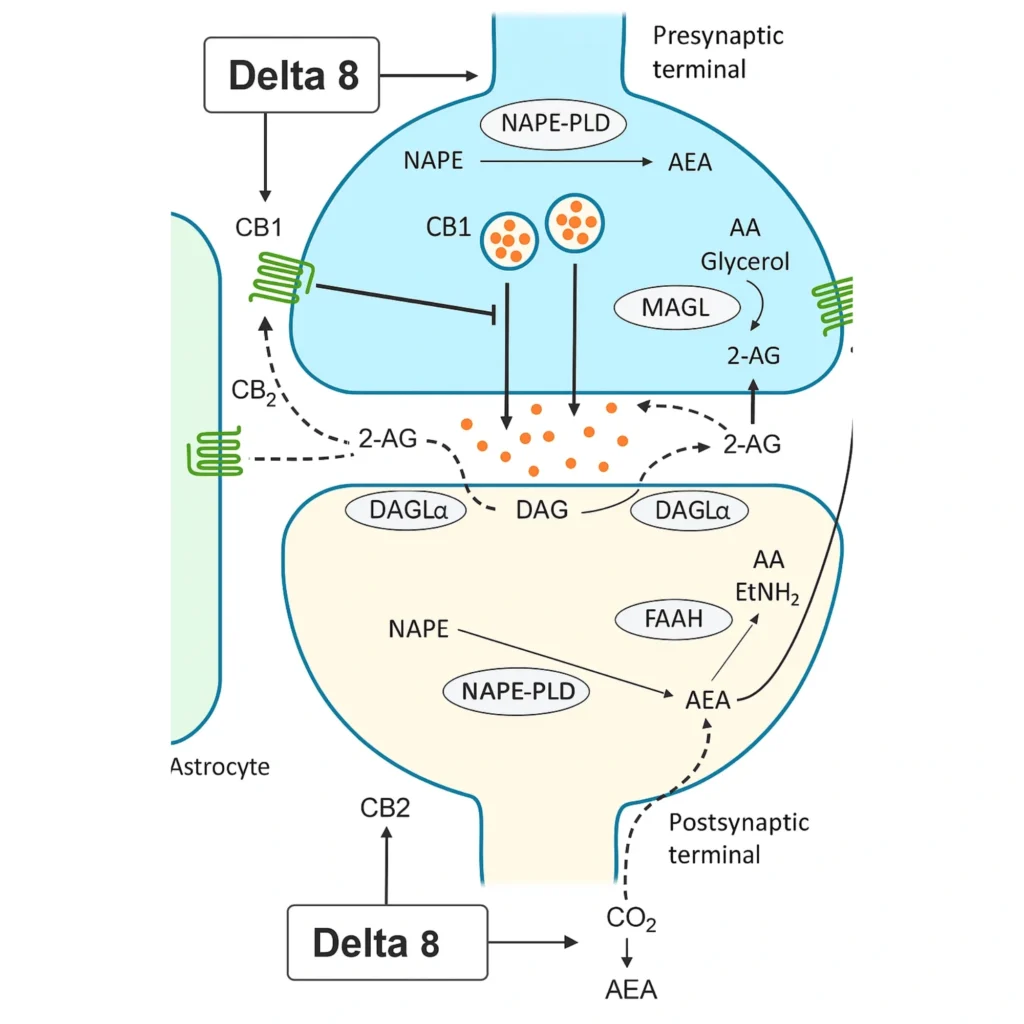
Delta 8 THC is a hemp-derived cannabinoid that occurs naturally in trace amounts but is often synthesized from CBD. Anecdotal evidence and limited studies suggest it provides mild psychoactive effects, typically around half as strong as Delta 9, and is less likely to trigger paranoia or acute anxiety. A user survey of over 500 participants reported that:
- 71% experienced notable relaxation,
- 68% felt euphoria, and
- 83% reported little to no paranoia or anxiety
These qualities make Delta 8 for Anxiety attractive to those looking for calm and focus without the intensity.
What Is Delta 9 THC?
Delta 9‑THC is the classic cannabinoid most associated with cannabis. It stimulates dopamine release and is recognized for its therapeutic potential, especially for anxiety, pain, and insomnia. Studies show that Delta 9 help with anxiety can hinge on dosage. For example, 7.5 mg reduced stress in volunteers during stress tests, while higher doses (12.5 mg) sometimes increased negative emotions. That means Delta 9 for Anxiety may work wonders at low doses but can backfire if taken too heavily.
Comparing Delta 8 and Delta 9 for Anxiety Relief
- Potency & Psychic Intensity:
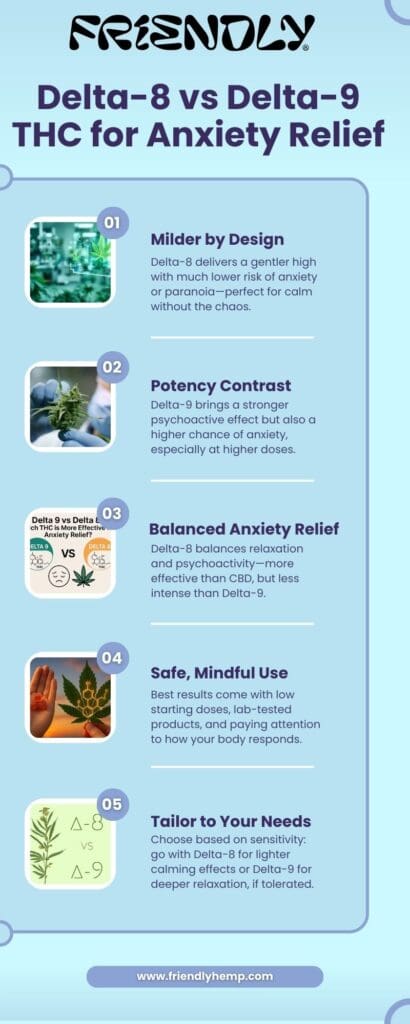
- Delta 9 is significantly stronger and more psychoactive.
- Delta 8 offers a gentler, clearer-headed effect, ideal for those prone to anxiety or first-time users.
- Side Effect Profile: Delta 8 is consistently reported as producing fewer instances of anxiety or paranoia, while Delta 9 may trigger these feelings at higher doses.
- Duration & Use Timing: Delta 9 typically delivers a deeper, more prolonged effect. By contrast, Delta 8 offers a quicker onset and smoother, more functional relief, often preferred during the daytime.
- User Tolerance & Experience: Beginner users may find Delta 8 for Anxiety more accessible and manageable. Those with greater tolerance or needing stronger relief may benefit from low-dose Delta 9.
Patient Experience & Preference
When thinking, “Does Delta 8 help with anxiety, or does Delta 9 help with anxiety?” personal preference plays a big role:
Mild to Moderate Stress
Users often lean toward Delta 8, as it supports clarity and calm without cloudiness. Many report feeling more in control and grounded, making it a preferred option for workdays, social interactions, or situations that require mental sharpness. It’s also less likely to cause racing thoughts or drowsiness, which is ideal for daytime use.
Severe Anxiety or Nighttime Use
Low-dose Delta 9 may deliver deeper relaxation and relief. It’s commonly used by individuals dealing with chronic anxiety or sleep disturbances, especially when emotional tension builds up toward the end of the day. When taken in moderate amounts, it can help the body unwind and support more restorative sleep.
Balancing Full-spectrum Effects
Some choose hybrids or micro-dose Delta 9 products for a more nuanced effect. These blends often combine Delta 9 with CBD or calming terpenes to mellow out the experience. Micro-dosing also allows users to experience benefits without the high, giving them more control over how they manage anxiety throughout the day or night.
Product Formats & Practical Use
Both cannabinoids come in multiple delivery forms, allowing users to tailor their anxiety relief experience based on preference, onset time, and desired strength:
Gummies and Edibles
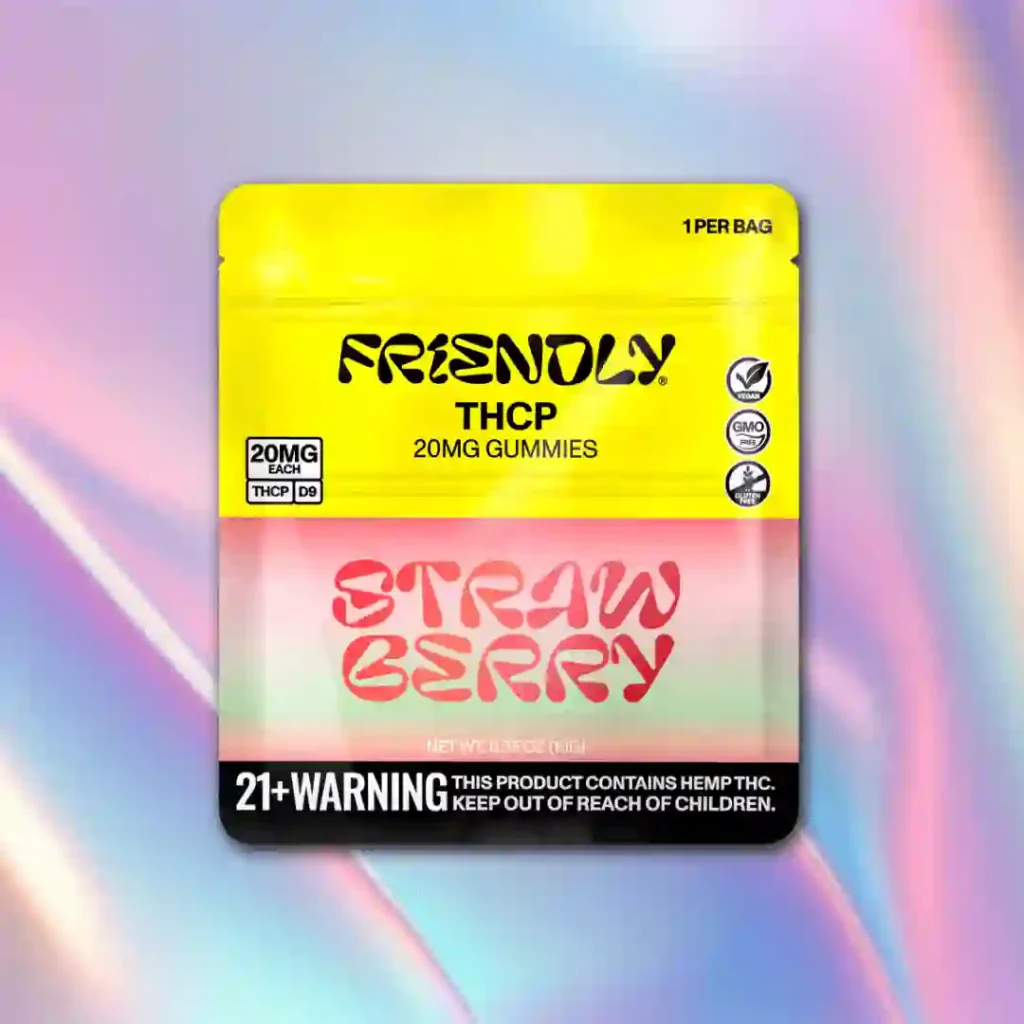
Offer controlled dosing and a longer onset, typically 30 to 90 minutes. These are ideal for those who want sustained anxiety relief without needing to redose frequently. They’re discreet, tasty, and especially popular for nighttime use when you want gradual, extended calm without interruptions.
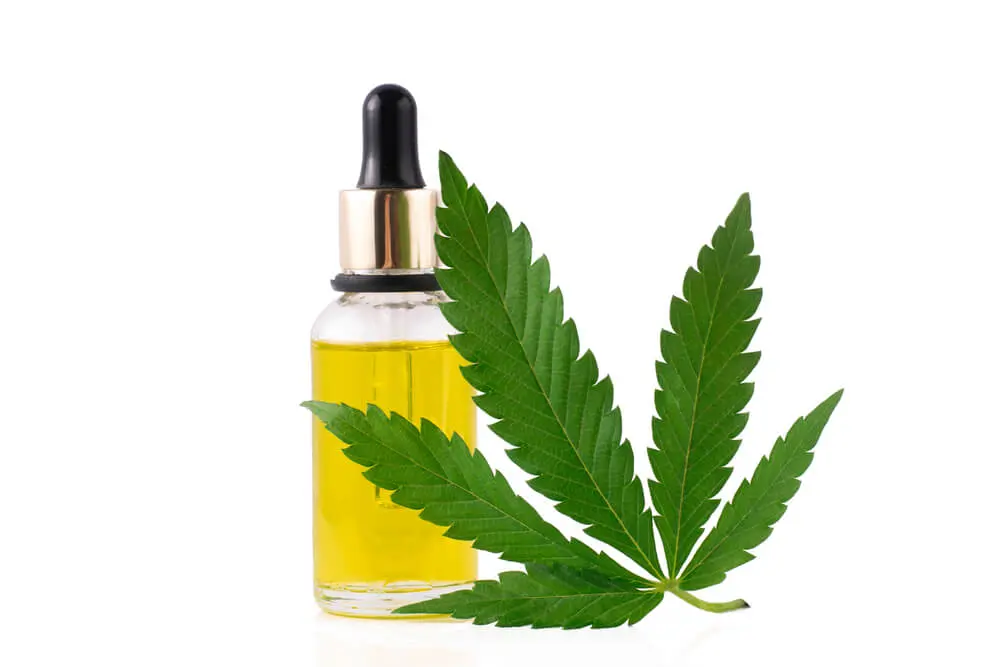
Oils and Tinctures
Provide flexible dosing with quicker sublingual effects (15 to 30 minutes). Tinctures are great for users who want more precision in how much Delta 8 or Delta 9 they consume. With proper dosing, these can be used for both day and night anxiety relief and are often blended with calming cannabinoids like CBD or CBN.
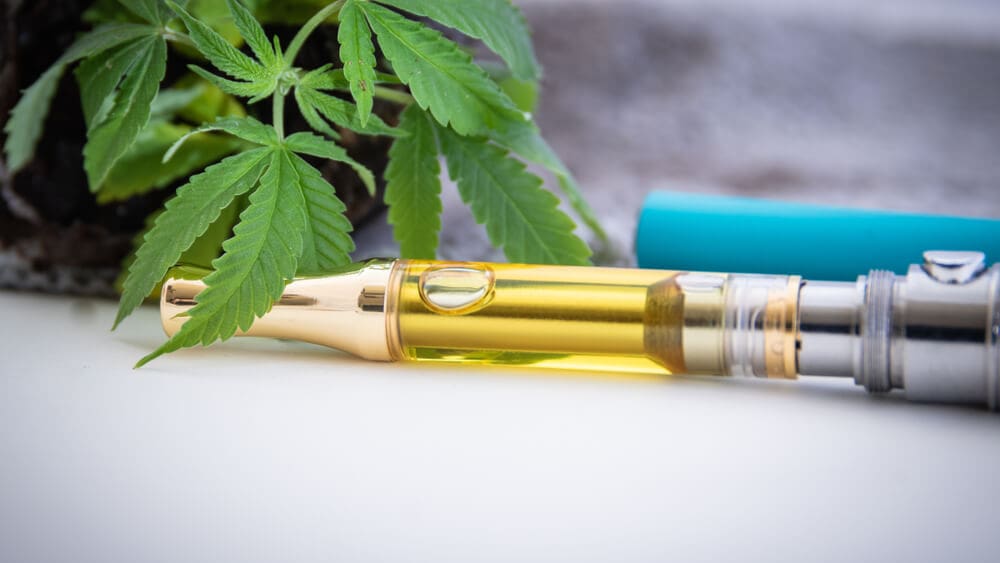
Vapes
Deliver the fastest onset, often within minutes, making them ideal for sudden spikes in stress or social anxiety. However, inhalation may not be suitable for everyone, especially those with sensitive lungs or respiratory concerns. They’re favored for their convenience and immediate effects but should be used mindfully.
Look for options like Delta 8 for Anxiety oils enriched with soothing terpenes (such as linalool or myrcene) or micro-dosed Delta 9 for Anxiety gummies designed to provide subtle, controlled calm without overwhelming psychoactive effects.
Safety, Legality, and Lab Testing of Delta 8 and Delta 9
- Compliance with the 2018 Farm Bill means hemp-derived D8 and D9 (<0.3% Delta 9 in hemp) are federally legal, though some states restrict them.
- Ensure third-party lab testing for purity, potency, and absence of contaminants.
- Begin with low doses and adjust slowly, especially for Delta 9, due to its potency.
How to Choose the Right Option Between Delta 8 & Delta 9?
Not sure whether Delta 8 or Delta 9 is the better fit for your anxiety relief needs? Here’s a quick breakdown to help you decide based on your comfort level, time of day, and desired intensity:
- If You’re New to THC or Have Mild Anxiety: Choose Delta 8 THC. It offers gentle, calming effects without intense psychoactivity.
- If You Deal with Moderate to Severe Anxiety: A low dose of Delta 9 THC might work better. It delivers stronger relaxation when used carefully.
- For Stress Relief During the Day: Delta 8 oils or vapes are ideal. They provide smooth focus and calm without affecting functionality.
- For Deep Nighttime Relaxation: Delta 9 edibles are a great choice. Their effects last longer and promote restful calm.
Conclusion
When comparing Delta 8 vs Delta 9 for Anxiety, the best choice comes down to your experience level, sensitivity, and desired intensity. Delta 8 offers smooth, mild relief, perfect for daytime ease, while low-dose Delta 9 gives deeper calm for evening use.
At Friendly Hemp, we prioritize quality, transparency, and well-being. We recommend starting with small doses, choosing lab-tested products, and tuning into your body’s feedback. Whether it’s Delta 8 or Delta 9, finding the right match can bring meaningful anxiety relief as part of your wellness journey. Contact us today!
You must be logged in to post a comment.
More Similar Posts