How Does the Endocannabinoid System Affect Addiction?
Cravings, mood swings, and the struggle to break unwanted habits can feel overwhelming, especially when they seem to come out of nowhere. For many, these challenges aren’t just about willpower; they’re tied to how the brain’s reward and stress systems work. One of the key players in this process is the body’s natural regulatory network: the endocannabinoid system (ECS).
The ECS influences emotional balance, stress adaptation, and how we respond to rewarding experiences. Understanding how the Endocannabinoid System Affects Addiction can reveal why certain triggers feel so powerful and how resilience can be built over time. In this blog, we’ll explore the science, the mechanisms, and practical wellness strategies that support a healthy ECS, empowering you with knowledge rooted in credible research.
What Is the Endocannabinoid System?
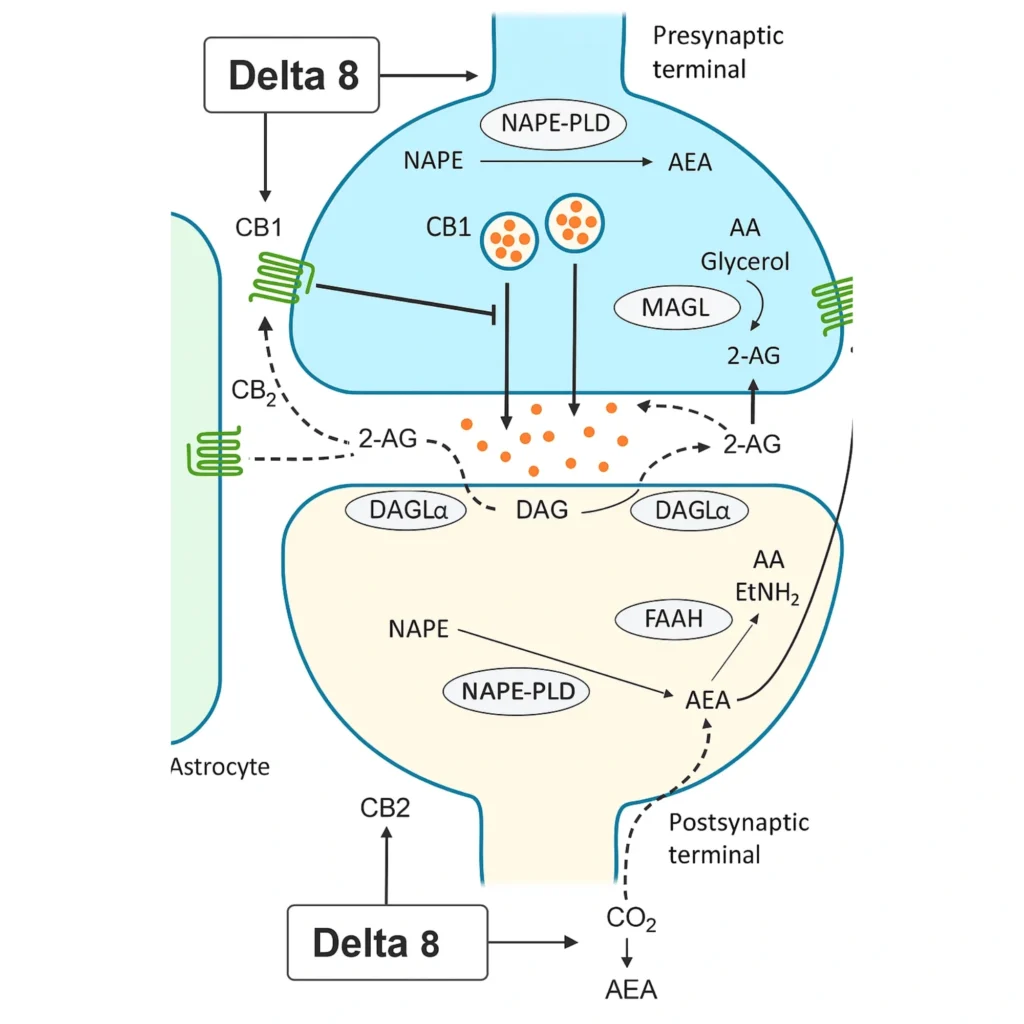
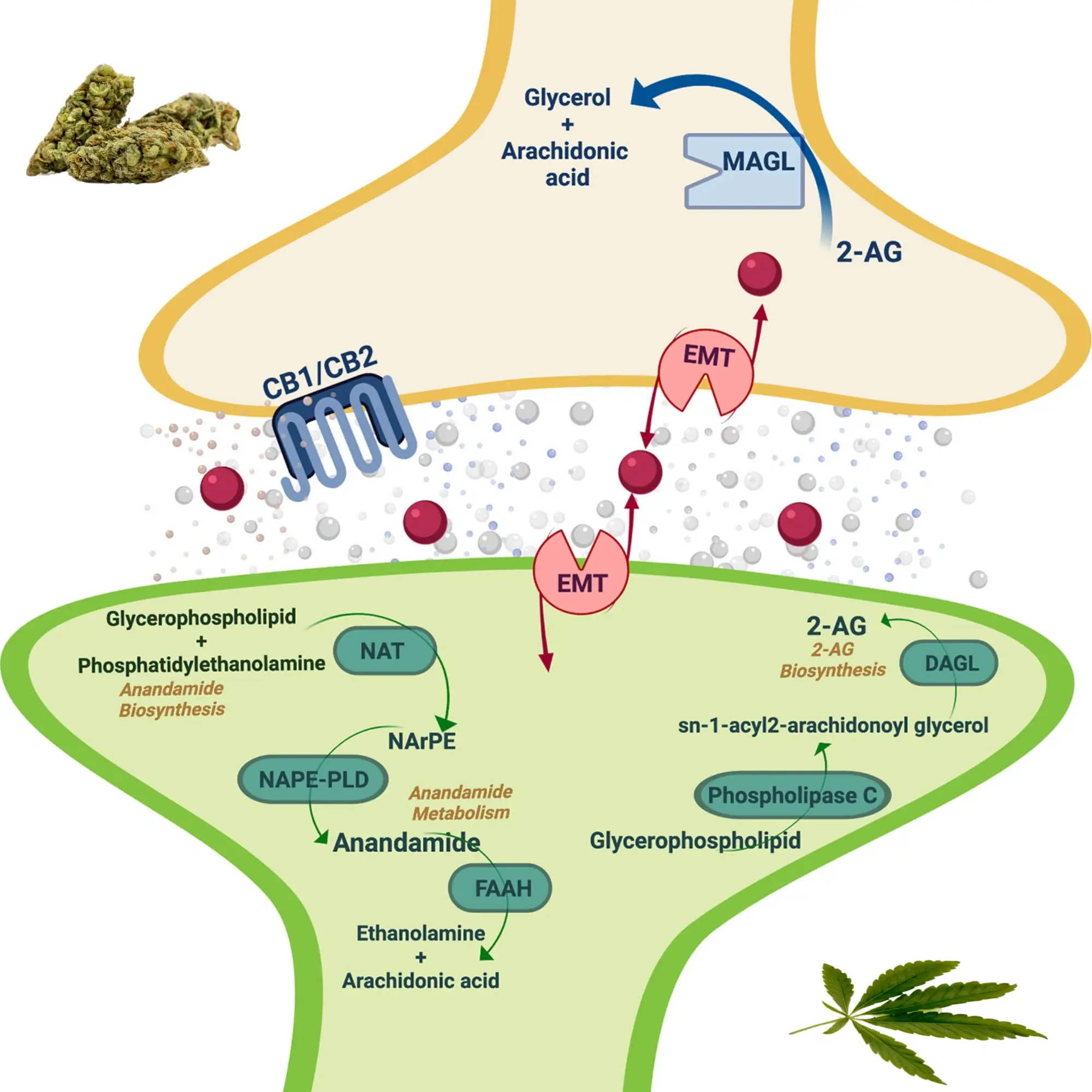
The ECS is composed of endogenous cannabinoids (notably anandamide and 2‑arachidonoylglycerol, or 2‑AG), the CB1 and CB2 receptors, and enzymes like FAAH and MAGL that synthesize or break down these messengers.
It maintains homeostasis by modulating mood, memory, appetite, sleep, and even immune response. CB1 receptors are highly expressed in brain areas tied to emotion and motivation, while CB2 is more associated with immune and peripheral function.
ECS and the Brain’s Reward Pathways
The ECS interacts closely with the brain’s mesocorticolimbic dopamine system, crucial for processing reward. Endocannabinoid signaling in the ventral tegmental area (VTA) stimulates midbrain dopamine cells and boosts dopamine release in the nucleus accumbens (NAc), reinforcing motivated behaviors.
Furthermore, eCBs like 2‑AG facilitate this dopamine-driven reinforcement by modulating local circuits. Recent research highlights that 2‑AG mobilized from VTA dopamine neurons is critical for transferring dopamine signaling from rewards to predictive cues, essential for conditioned reward-seeking behavior.
How Does the ECS Influence Addiction?
Mechanisms Behind Addiction Pathways
Addictive behaviors often hijack the ECS within the brain’s reward circuitry. CB1 receptors are expressed on GABAergic and glutamatergic terminals that modulate dopamine neuron output. In GABAergic pathways, when CB1 activation suppresses inhibition, it results in disinhibition of dopamine neurons, effectively increasing dopamine firing. This answers the question: Do endocannabinoids increase dopamine? They do, largely via circuit-level disinhibition.
On the other hand, CB1 on glutamatergic terminals can suppress excitatory input to dopamine neurons, showing a balance in modulation. So overall, the ECS fine-tunes dopamine delivery by regulating both inhibitory and excitatory upstream signals.
Addiction, Craving, and Relapse
The ECS plays a crucial role in maintaining addiction-related neural adaptations. CB1 receptors are widespread in mesocorticolimbic regions involved in addiction, decision-making, and relapse behavior. Experimental and clinical research suggests that manipulating ECS signaling, such as via allosteric CB1 modulators or FAAH inhibitors, can reduce drug-seeking behavior and relapse risk. Moreover, cannabinoids like CBD may support recovery by reducing craving and disrupting the reconsolidation of drug-related memories.
What Science Says About the ECS and Addiction?
Over the last two decades, research into the endocannabinoid system’s role in addiction has grown significantly, offering new perspectives on prevention and recovery strategies. Preclinical studies have shown that blocking CB1 receptors in animals can reduce drug-seeking behaviors for substances like alcohol, nicotine, and opioids (National Institute on Drug Abuse). This suggests CB1 plays a direct role in reinforcing addictive patterns.
Additionally, human imaging studies reveal that individuals with substance use disorders often display altered CB1 receptor availability in brain regions linked to reward and decision-making (Neuropsychopharmacology Journal). These findings help explain why cravings can persist long after stopping use.
Importantly, scientists are also exploring how non-intoxicating cannabinoids such as CBD might interact with the ECS to modulate craving responses without creating dependence. While more large-scale clinical trials are needed, early data point to a potential supportive role in wellness-based recovery approaches.
Supporting a Healthy ECS
Promoting balanced ECS function doesn’t rely on overstated claims, just sensible wellness practices:
- Sleep & Stress Management: Chronic stress can disrupt ECS, particularly reducing anandamide and altering 2‑AG responses in stress circuits.
- Exercise: Physical activity boosts anandamide levels, contributing to mood uplift and “runner’s high,” which aligns with ECS activation.
- Nutrition & Hemp-Derived Cannabinoids: While not medical treatments, hemp-derived cannabinoids (such as non‑intoxicating CBD) may align with natural ECS pathways to support stress resilience and overall balance, when used with care.
The ECS in Recovery and Wellness
A balanced ECS supports emotional stability, informed decision-making, and reward sensitivity, cornerstones of sustainable recovery. Emerging findings point to the potential of non‑intoxicating cannabinoids like CBD in supporting these facets, without bold therapeutic claims. Integrating lifestyle measures like restful sleep, moderate exercise, and mindful use of hemp products can foster a resilient ECS foundation that complements broader wellness routines.
Key Takeaways
Understanding the relationship between the endocannabinoid system and addiction can help bridge the gap between complex neuroscience and practical wellness strategies. Here are the main insights:
- The Endocannabinoid System Affects Addiction via modulation of dopamine-driven reward circuits, especially through CB1-mediated disinhibition of dopamine neurons.
- Endocannabinoids can increase dopamine release by fine-tuning inhibitory and excitatory inputs (Do endocannabinoids increase dopamine? Yes, through circuit modulation).
- ECS manipulation shows promise in reducing craving and relapse, offering new insights for supportive strategies.
- Lifestyle habits, like good sleep, exercise, stress support, and carefully considered hemp-based cannabinoid use, can promote a balanced ECS without exaggerated claims.
Conclusion
Understanding how the Endocannabinoid System Affects Addiction gives us credible, science-backed insight into motivation, reward, and recovery. As we craft smart, wellness-minded approaches, we at Friendly Hemp stay committed to supporting ECS balance, from integrative lifestyle habits to safe, thoughtful hemp products. Our journey is about enhancing resilience, not replacing professional care. Contact us today!
You must be logged in to post a comment.
More Similar Posts