CB1 and CB2 Receptors Explained: How Delta 8 Interacts Differently
Finding the right cannabis product can feel tricky, too strong, not strong enough, or just not giving the balance you’re looking for. That’s a common pain point for many users who want consistency without the overwhelm. The key often lies in how Delta 8 interacts with CB1 and CB2 receptors, the two main receptors in your body’s endocannabinoid system.
These tiny receptors influence everything from mood and focus to immune response. When Delta 8 connects with them, it tends to create a smoother, more balanced experience than other cannabinoids, which explains why understanding this connection is important. Let’s get started!
What Are CB1 and CB2 Receptors?
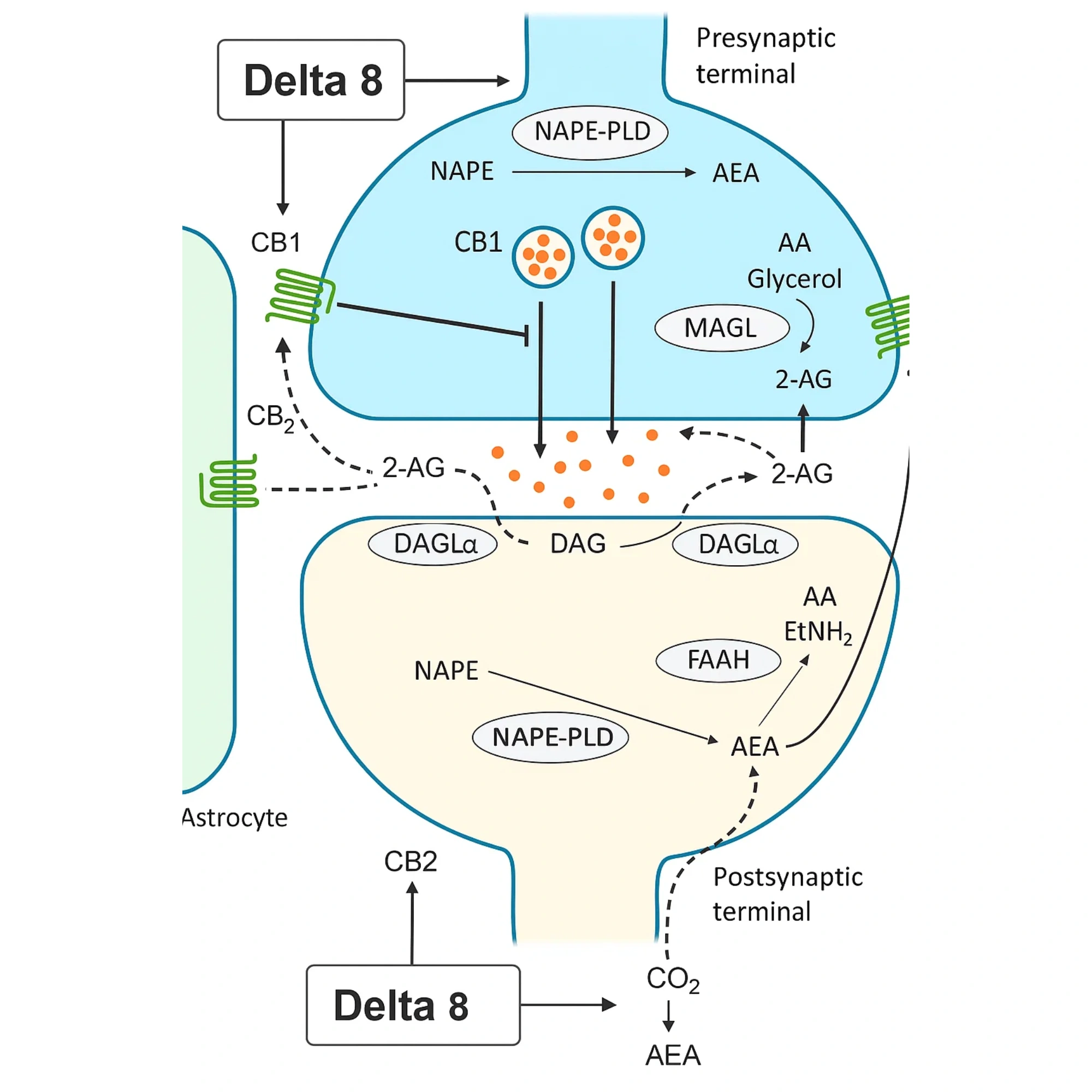
At the simplest level, CB1 and CB2 receptors are like little “signal catchers” in your body’s endocannabinoid system. They’re the places where cannabinoids like Delta 8 and Delta 9 THC dock and send messages that affect how you feel, think, and physically respond.
Where Are These Receptors Located?
Location matters when it comes to CB1 and CB2 receptors, because where they show up in your body explains how they work.
- CB1 receptors hang out mostly in your brain and central nervous system, influencing things like mood, memory, and how you sense the world around you.
- CB2 receptors live more in your immune system and peripheral tissues, where they help regulate inflammation, stress recovery, and overall immune balance.
How Do They Work Together?
Here’s the cool part: when CB1 and CB2 both get activated, they create a kind of mind-body harmony. CB1 is steering your mental and emotional state, while CB2 is making sure your body feels steady and balanced. That’s why when cannabinoids like Delta-8 interact with them, many people report feeling mentally clear but also physically at ease.
In fact, research from the National Institutes of Health (NIH) indicates that CB1 receptors are responsible for over 60% of all cannabinoid receptor activity in the brain (NIH, Molecular Pharmacology, 2020). That statistic alone explains why these receptors are such a significant factor in shaping the experience of cannabinoids.
How Does Delta 8 Interact with CB1 Receptors?
Now the science gets interesting. Delta 8 THC, while chemically similar to Delta 9, behaves a bit differently, and perhaps more gently.
- Delta 8 is a partial agonist for CB1 receptors, meaning it activates them but less intensely.
- Many users describe a milder, more focused experience, without the heavier intensity that strong CB1 activation from Delta 9 can bring because it binds more softly.
That’s why Delta 8 may support mood and mental clarity with a more approachable feel, which is why it’s increasingly chosen for thoughtful, balanced wellness.
How Does Delta 8 Interact with CB2 Receptors?
Delta 8 doesn’t just stop at the brain; it also engages with CB2 receptors, which come with their own set of benefits:
- Like CB1, Delta 8 acts as a partial agonist for CB2, but with effects that lean toward supporting the immune system and reducing stress.
- In fact, research notes that Delta 8’s binding strength to CB2 is similar to that of Delta 9, suggesting it may support physical balance more directly yet calmly.
That’s why many people value Delta 8 THC for its harmonious potential, blending gentle mental ease with supportive physical comfort.
Why Does Delta 8 Act Differently Than Delta 9?
You might wonder what sets Delta 8 apart from its more famous cousin. Here’s why:
- Both cannabinoids interact with CB1 and CB2, but Delta 8 binds more weakly to CB1, leading to softer, more manageable effects.
- Delta 8 still supports body-level benefits, such as recovery and comfort, again in a gentler delivery, as CB2 activation remains comparable to Delta 9.
- In other words, the combination of smoother CB1 effects and solid CB2 engagement gives Delta 8 THC its signature: a balanced, clear-headed, and wellness-forward experience.
This balanced profile is exactly why lab-tested, transparent products make a difference, so users know what’s inside and what to expect.
How Do CB1 and CB2 Work Together: Creating Balance
Here’s where things come full circle. The real magic is the interaction between CB1 and CB2 working in tandem:
- CB1 handles mental and sensory modulation (for example, mood, calmness, perception), while CB2 controls immune signaling and physical comfort.
- When Delta 8 activates both in harmony, users often feel a blend of mental clarity and gentle body relief, that sense of being balanced inside and out.
- Grasping this science helps users make informed choices, like looking for well-formulated products that deliver consistent Delta 8 THC with transparency. It’s all about trusting what goes into your body and how it supports you.
Conclusion
Understanding how Delta 8 interacts with CB1 and CB2 receptors unlocks the reason why this cannabinoid feels so well-balanced, comforting yet clear, and supportive yet gentle. At Friendly Hemp, we prioritize that harmony by offering lab-tested formulations designed to deliver the right blend of CB1 and CB2 access. Through thoughtful product design and transparency, we’re proud to guide you toward a calm, centered wellness experience. Contact us today!
You must be logged in to post a comment.
More Similar Posts