Does Delta-8 Affect Delta-9 Tolerance? Check If Your Products Are Lab Tested
If you’ve ever noticed your usual THC products don’t hit quite the same, then you might be thinking, “What’s wrong with the products?” The reason can be tolerance, which is a real frustration, as your body simply adapts to the substance. In fact, research done by the National Institute on Drug Abuse (NIDA) shows that THC’s effects can fade with repeated use as your brain’s CB1 receptors become less responsive over time.
That raises a big question many users ask: Does Delta-8 affect Delta-9 tolerance? With both options easy to find, it’s natural to wonder if switching things up changes how your body reacts. In this blog, we’ll discuss how tolerance actually works, what Delta-8 means for your response to Delta-9, and why checking lab-tested results is key to safe, smart choices.
Understanding Tolerance in Cannabinoids
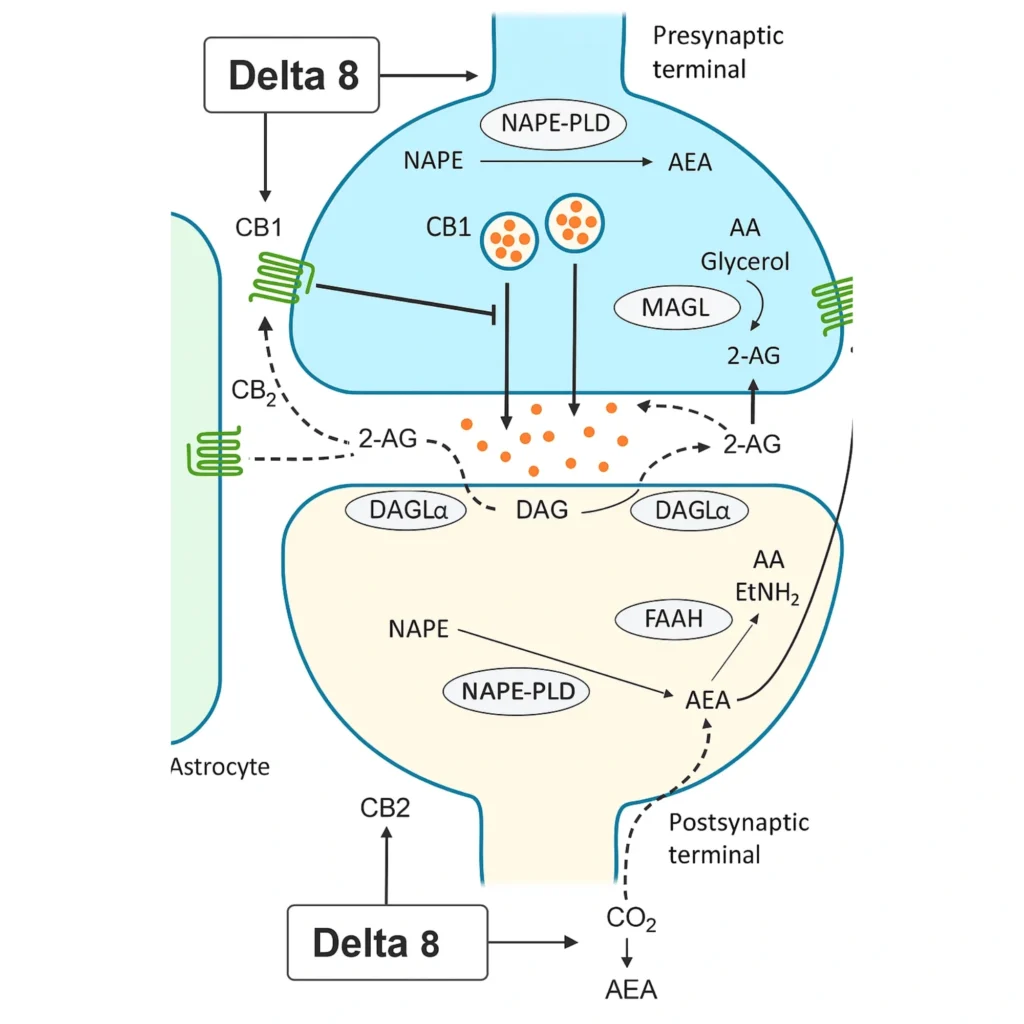
Tolerance occurs when the body adjusts to repeated exposure to a substance. That makes the effects less noticeable over time. In cannabis, tolerance happens because the endocannabinoid system, specifically the CB1 receptors in the brain, becomes less responsive after being continuously activated by cannabinoids like THC.
This is why a new consumer may feel pronounced effects with small amounts, while someone who uses THC regularly may need much higher doses to achieve the same experience. This adaptation is not permanent, but it takes time for receptors to reset after use stops.
Importantly, tolerance doesn’t apply only to one cannabinoid. A fact that many cannabinoids share the same receptor pathways, exposure to one can influence how the body responds to another. This is known as cross-tolerance, and it’s central to the relationship between Delta-8 and Delta-9.
Does Delta-8 Affect Delta-9 Tolerance?
Both Delta-8 and Delta-9 bind to CB1 receptors, but they interact with slightly different strengths. Delta-9 THC is the more potent of the two, producing stronger psychoactive effects. Delta-8 THC, while similar in chemical structure, binds with less intensity, leading to a milder experience for most users.
Using Delta-8 can still influence Delta-9 Tolerance because they share the same receptor sites. Even though Delta-8 produces subtler effects, it continues to stimulate CB1 receptors, which prevents the receptors from fully “resetting.” In practical terms, this means that someone who frequently consumes Delta-8 may not notice a full drop in tolerance if they switch back to Delta-9.
Research supports this overlap. A study published in Pharmacology Biochemistry and Behavior noted that cannabinoids with structural similarities often create overlapping tolerance effects, confirming the concept of cross-tolerance in animal models. While human studies remain limited, user experiences align with these findings: switching to Delta-8 rarely feels like starting fresh.
Nuanced Insights on Delta-8 THC and Delta-9 Tolerance
The relationship between these two cannabinoids isn’t identical, though. Several factors influence how Delta-8 and Delta-9 interact when it comes to tolerance:
- Potency Levels: Delta-9 THC engages receptors more strongly, which means tolerance builds faster compared to Delta-8 THC. Regular Delta-9 consumers often report that their tolerance rises significantly in just a few weeks of daily use.
- Frequency of Use: Someone who uses Delta-8 occasionally may not notice much impact on Delta-9 tolerance. However, with consistent daily use, the effects of cross-tolerance become increasingly apparent.
- Individual Metabolism: Everyone processes cannabinoids differently. Genetic factors, liver enzyme function, and body fat composition can all influence the rate at which tolerance develops.
- Break Periods: True tolerance resets generally require taking a break from all forms of THC. Using Delta-8 instead of Delta-9 may slow tolerance buildup, but it does not function as a full “reset button.”
For consumers, this means being mindful of patterns. If you notice that Delta-9 feels less effective even after taking a break, ongoing Delta-8 use may be part of the explanation.
Why Delta-8 and Delta-9 Lab Test Results Matter?
Third‑party lab testing COAs (Certificates of Analysis) ensure your Cannabis products are both safe and accurately labeled. Here’s what to prioritize:
- Cannabinoid Profile: Especially Delta‑8 THC and Delta-9 THC levels.
- Potency Accuracy: Confirm that doses align with packaging claims.
- Purity and Safety: Screening for pesticides, heavy metals, solvents, and contaminants.
How to Check Lab Results Before Buying?
Knowing the importance of lab testing is only half the battle. The other half is learning how to read and evaluate reports effectively. Here’s a straightforward step-by-step guide:
- Locate the COA: Reputable brands provide a QR code on packaging or a direct link on their product page. If it’s missing, that’s a red flag.
- Check lab accreditation: Make sure the testing lab is independent and has credentials such as ISO certification. Avoid results from in-house labs only.
- Confirm test dates: Results should be recent, preferably within the last six to twelve months, and tied to the specific batch number of the product you’re buying.
- Review cannabinoid content: Pay close attention to both Delta-8 THC and Delta-9 THC percentages. This helps you anticipate how the product may interact with your tolerance.
- Look at safety results: Scan the sections for pesticides, heavy metals, residual solvents, and microbial testing. “Not detected” or values below safety thresholds should be clearly marked.
- Spot inconsistencies: If a product label promises 90% Delta-8 but the COA shows 65%, the label is misleading. Always trust the lab results over marketing claims.
Choosing High-Quality Cannabis Products
With so many options on the market, choosing the right Cannabis product requires more than just reading a label. Look for these indicators of quality:
- Updated Lab Reports: Every reputable brand updates COAs regularly and ties them to individual product batches.
- Transparency in Sourcing: Clear information about Cannabis origin, cultivation practices, and extraction methods signals accountability.
- Compliance with Cannabis Regulations: Products should remain within the federal legal limit of 0.3% Delta-9 THC on a dry-weight basis.
- Formulations for Control: Some products offer carefully balanced blends of Delta-8 THC with other cannabinoids to create a smoother experience, potentially helping manage tolerance more effectively.
Conclusion
So, does Delta-8 affect Delta-9 tolerance? Yes, it does. Both cannabinoids share the same receptor pathways, and even though Delta-8 is less potent, it still influences how the body responds to Delta-9. While using Delta-8 may slow the pace of tolerance buildup, it does not eliminate cross-tolerance. To reset fully, a break from all THC products is necessary.
At Friendly Hemp, we’re committed to helping you make informed choices. That’s why we provide accessible, third-party lab results with every product, ensuring transparency, accuracy, and safety. When you shop with us, you can feel confident knowing that your wellness journey is supported by trusted, lab-verified products. Contact us today!
You must be logged in to post a comment.
More Similar Posts