Is Delta 9 Safer Than Delta 8? Myths vs. Facts
With so many people asking, “Is Delta 9 safer than Delta 8?”, it’s no surprise that consumers are confused. And it’s obvious, why? With THC edibles, tinctures, and vapes becoming more widely available, especially in hemp-derived formats, the question of safety is top of mind. Online forums, TikTok videos, and product labels don’t always offer the facts, so consumers are left guessing.
This blog clears up the confusion with a science-informed breakdown of myths versus facts. We’ll explore how Delta 9 and Delta 8 work, what’s known about their effects, and why the answer to this safety debate is more nuanced than it seems. Let’s separate the facts from the myths.
Delta 8 vs Delta 9: What’s the Core Difference?
Let’s start with the basics. Both Delta 8 THC and Delta 9 THC are naturally occurring cannabinoids usually found in the cannabis plant. The main difference is their molecular structure. Delta 9 has a double bond on the ninth carbon chain, while Delta 8 has it on the eighth, making Delta 8 slightly less potent in terms of its psychoactive effects.
- Delta 9 THC is considered the primary psychoactive compound in cannabis. It’s well-studied and known for producing strong euphoric effects.
- Delta 8 THC is often described as more mellow and manageable. It’s typically synthesized from CBD through isomerization, especially in hemp-derived products.
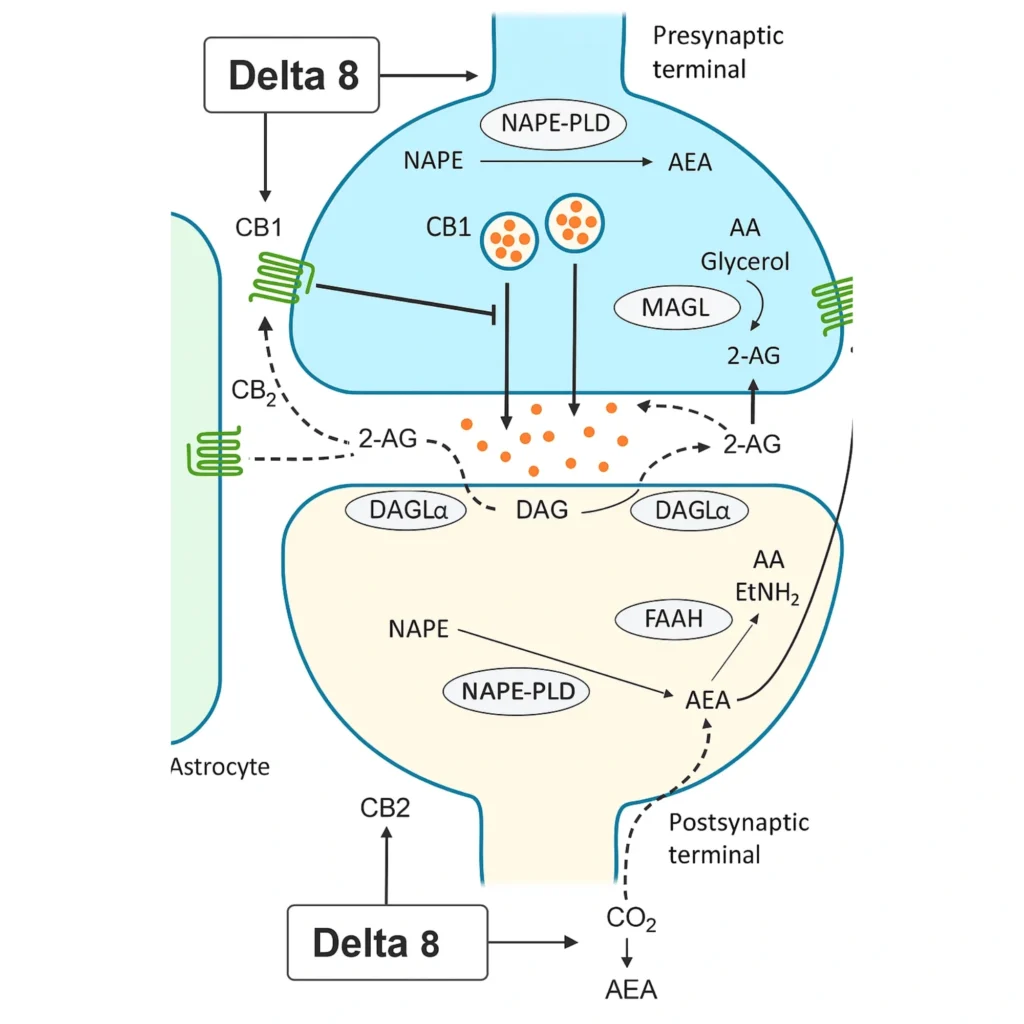
Despite structural similarities, these two compounds interact with the body’s endocannabinoid system slightly differently, which impacts their effects, duration, and how people respond to them.
Myth #1: Delta 8 Is Always Milder and Safer
A common belief is that Delta 8 is automatically safer because it’s “less potent.” While it’s true that Delta 8 THC may produce gentler effects, that doesn’t guarantee it’s safer for everyone.
- Potency vs. safety: A lower psychoactive intensity doesn’t mean lower health risks. Side effects like drowsiness, dry mouth, or anxiety can still occur, especially at high doses.
- Synthetic conversion: Since most Delta 8 THC on the market is converted from CBD in labs, product quality can vary. If improperly processed, residual solvents may remain, making quality control a crucial aspect of the process.
- Unregulated markets: In states where hemp products are unregulated, some Delta 8 products may lack proper testing, increasing the risk of contamination.
So while Delta 8 may feel gentler for many users, its safety depends more on the product quality and dosage than on the cannabinoid itself.
Myth #2: Delta 9 Is More Dangerous Because It’s Stronger
It’s true that Delta 9 THC is more potent than Delta 8, but potency alone doesn’t equal danger. In fact, Delta 9 is one of the most researched cannabinoids and is well-regulated in legal cannabis markets.
- Medical use: Delta 9 is used in FDA-approved medications like Marinol (dronabinol) to treat nausea and appetite loss.
- More data available: Because it’s been studied for decades, doctors and researchers understand Delta 9 THC’s effects, risks, and benefits far better than Delta 8.
- Legal framework: States that allow hemp-derived Delta 9 THC often have strict labeling, potency limits, and testing protocols that improve consumer safety.
So while Delta 9 may feel stronger, that doesn’t necessarily make it less safe, especially when used in low doses with products that meet federal and state guidelines.
Myth #3: You Can’t Have Side Effects with Delta 8
Many new users believe that Delta 8 is “side-effect-free.” That’s far from true. Like any cannabinoid, Delta 8 can produce unwanted effects if taken in high amounts or from poorly made products.
- Reported Side Effects: It includes fatigue, dry mouth, reduced coordination, or, in some cases, paranoia, especially when higher doses are consumed.
- Individual Tolerance Varies: Some users are more sensitive to Delta 8 than others, especially first-timers or those with lower body weight.
- Lack of Standardization: Because Delta 8 is newer and less regulated, it’s more prone to inconsistency in formulation and strength.
Bottom line: Whether you’re using Delta 9 THC or Delta 8 THC, start low and go slow. There’s no one-size-fits-all dose.
Fact Check: What Does Science Actually Say?
When evaluating is Delta 9 safer than Delta 8, scientific research offers valuable insight:
- Most Research Focuses on Delta 9: According to the National Institutes of Health (NIH), Delta 9 THC has well-documented effects on the brain, including short-term memory, motor skills, and mood.
- Delta 8 is Less Studied: A 2022 paper in the Journal of Cannabis Research noted that Delta 8 users reported similar benefits to Delta 9 users, but data is limited and largely anecdotal (SpringerOpen).
- Low Doses = Safer Outcomes: Multiple studies support the idea that lower doses of both cannabinoids are better tolerated, reducing the likelihood of adverse reactions.
In short, both cannabinoids appear to be safe when taken responsibly, in controlled amounts, and from trusted sources.
Product Quality Matters More Than Cannabinoid Type
Perhaps the most important takeaway is that the type of product you consume matters more than the cannabinoid itself. High-quality Delta 8 THC from a trustworthy brand is safer than low-grade Delta 9 from an unknown source, and vice versa.
- Look for COAs (Certificates of Analysis) from third-party labs.
- Choose brands that use organic hemp and avoid synthetic additives.
- Avoid products that contain unregulated Delta 8 distillates or untested ingredients.
- Read labels for serving size, THC content, and ingredient transparency.
This applies to both Delta 9 THC and Delta 8 THC gummies, tinctures, and vapes.
User Safety Tips for Both Cannabinoids
Want to enjoy Delta 8 or Delta 9 without worry? Here are smart, practical tips:
- Start with 2.5 to 5 mg, especially if you’re new
- Avoid combining with alcohol or sedatives
- Choose edibles for long-lasting effects, or vapes for faster onset
- Use only lab-tested products with explicit THC content
- Store safely, out of reach of children and pets
Responsible use = a safer and more enjoyable experience, no matter which cannabinoid you prefer.
Conclusion
So, is Delta 9 safer than Delta 8? The truth is: neither is inherently safer across the board. Safety depends on dosage, individual tolerance, product quality, and how the product is used. Both cannabinoids can be effective and enjoyable when chosen responsibly.
At Friendly Hemp, we take the guesswork out of THC by offering only fully compliant, lab-tested Delta 8 and Delta 9 products made from premium hemp. Whether you’re exploring cannabinoids for wellness or recreation, you can count on us to deliver safe, transparent, and reliable options, backed by facts, not fear. Contact us to get what you want most in a dosage that suits your body best!
You must be logged in to post a comment.
More Similar Posts